The date that matters
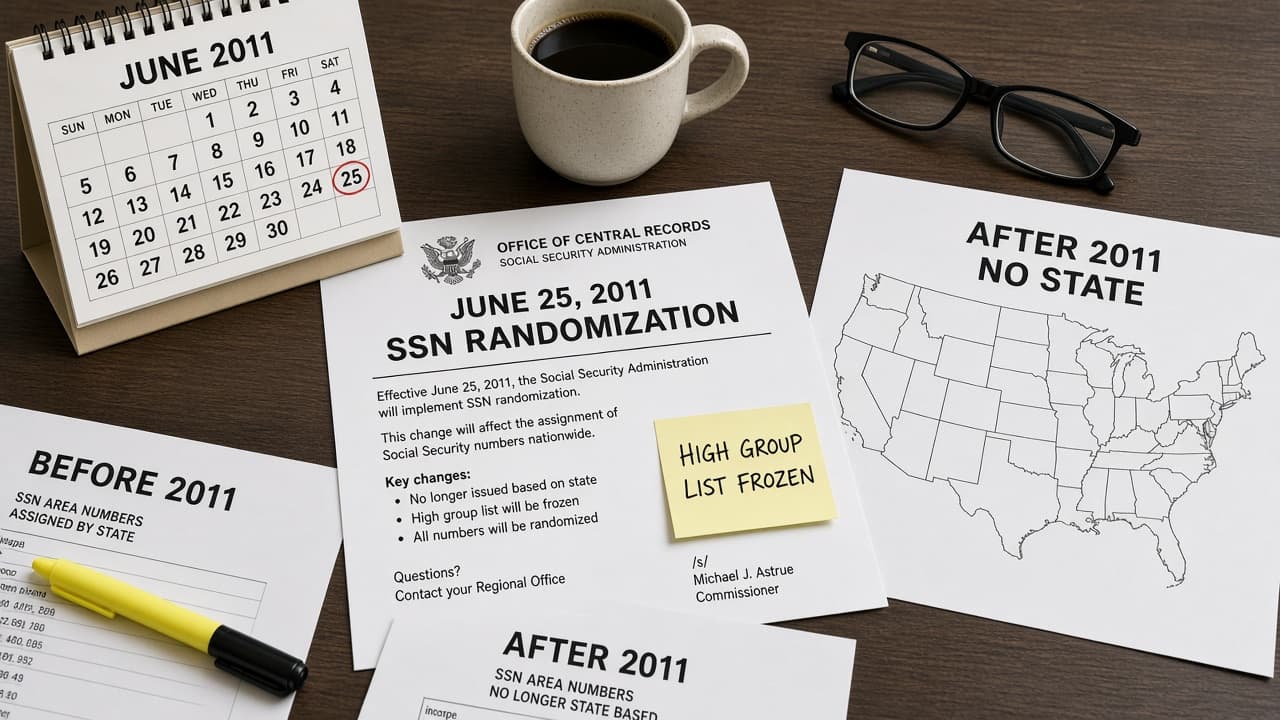
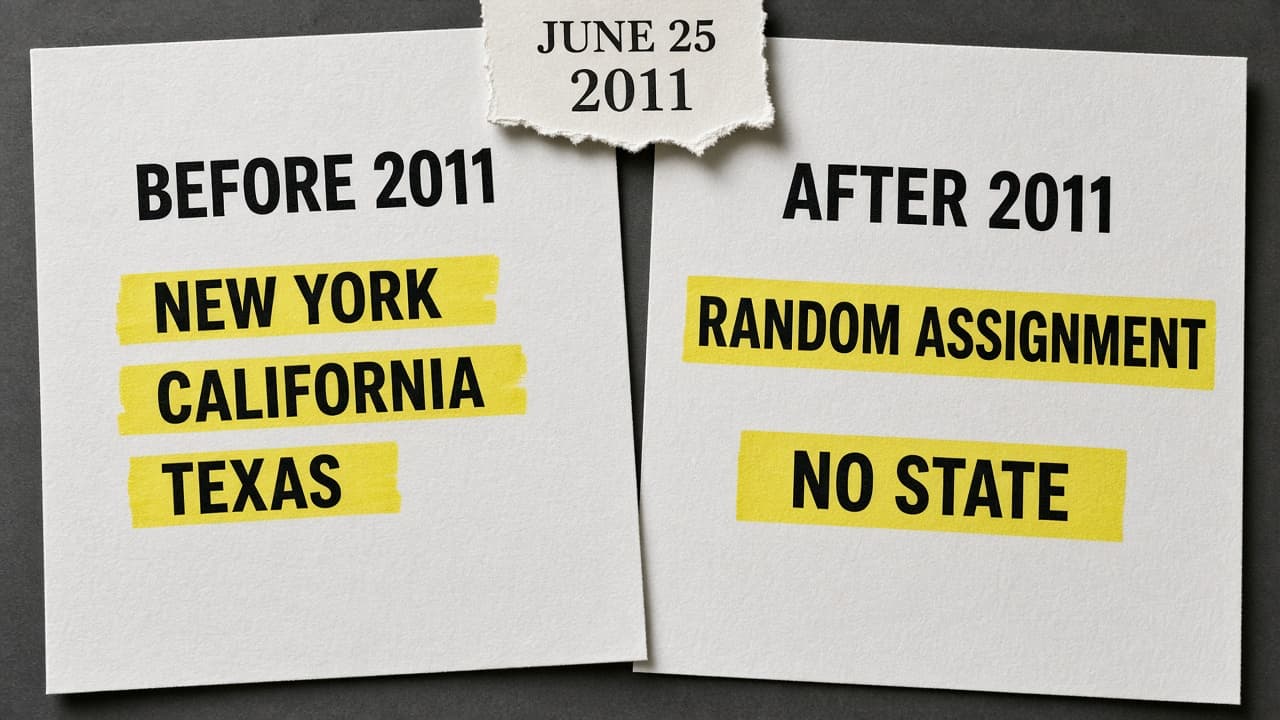
On 25 June 2011 the Social Security Administration changed how it assigns new numbers. SSA calls the change randomization. Numbers already issued were not recalled or rewritten. A card printed in 2004 still carries the same nine digits it always did.
Beginning that date, new area numbers are not handed out by state. Previously unused area numbers, except 000, 666, and 900–999, could enter the assignment pool. The High Group List that employers once used to test whether a number “had been issued yet” stopped being a live issuance map.
SSA had already told the public this was coming. On 3 July 2007 it published a Federal Register notice, Protecting the Integrity of Social Security Numbers (Docket No. SSA 2007-0046), stating its intent to randomize the nine-digit identifier. The implementation date, not the notice date, is the line that matters for reading a card.
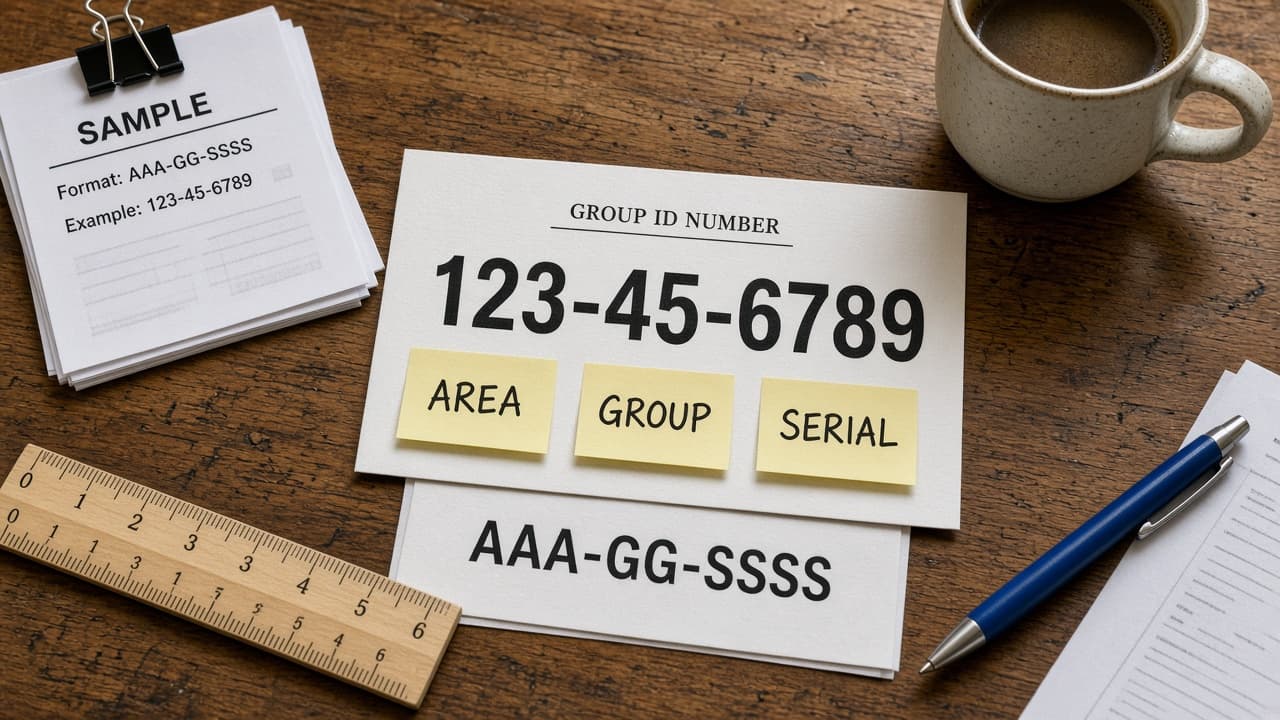
This page is about that change: why it happened, what froze, and what a public format check can still say. The historic allocation chart lives at SSN Area Numbers. The print-shape lesson is in What AAA-GG-SSSS used to mean. Neither page is reprinted here.
Capacity versus privacy
SSA’s randomization page names two jobs at once. The new method was meant to protect the integrity of the Social Security Number. It was also meant to extend the longevity of the nine-digit SSN nationwide. Those are different problems. They happened to share one fix.
On capacity, SSA said there were about 420 million numbers available for assignment, but the old process limited how many of those numbers each state could actually issue. Fast-growing states were going to exhaust their allocated areas while slower-growing states still sat on unused blocks. A nationwide identifier should not fail in one state because another state still had spare prefixes.
On privacy, the old system advertised too much. The area chart was public. The group-opening order was public. Combined with where and when an application was filed, the first five digits of a pre-2011 number were easier to guess. That filing place was the issuing state or the mailing ZIP, not automatically a birth state. The last four digits already leak on pay stubs, medical portals, and campus IDs. Together those facts were an identity-theft recipe.
Randomization broke the recipe for new cards and pooled unused capacity nationwide. It did not add a tenth digit. It did not encrypt old numbers. It did not make the last four digits harmless.
Why some states were running out of numbers
Before randomization, SSA allocated area numbers to states, territories, and a few program bands. Each area could use groups 01 through 99, skipping 00. Each group could use serials 0001 through 9999, skipping 0000. That is a large but finite stock per prefix, and prefixes were not a shared national pile.
SSA’s own explanation is blunt. The previous assignment process limited the numbers available for issuance to individuals by each state. Changing the methodology extended the longevity of the nine-digit SSN in all states. The 2007 notice and the 2011 employer pages repeat the same nationwide-longevity claim.
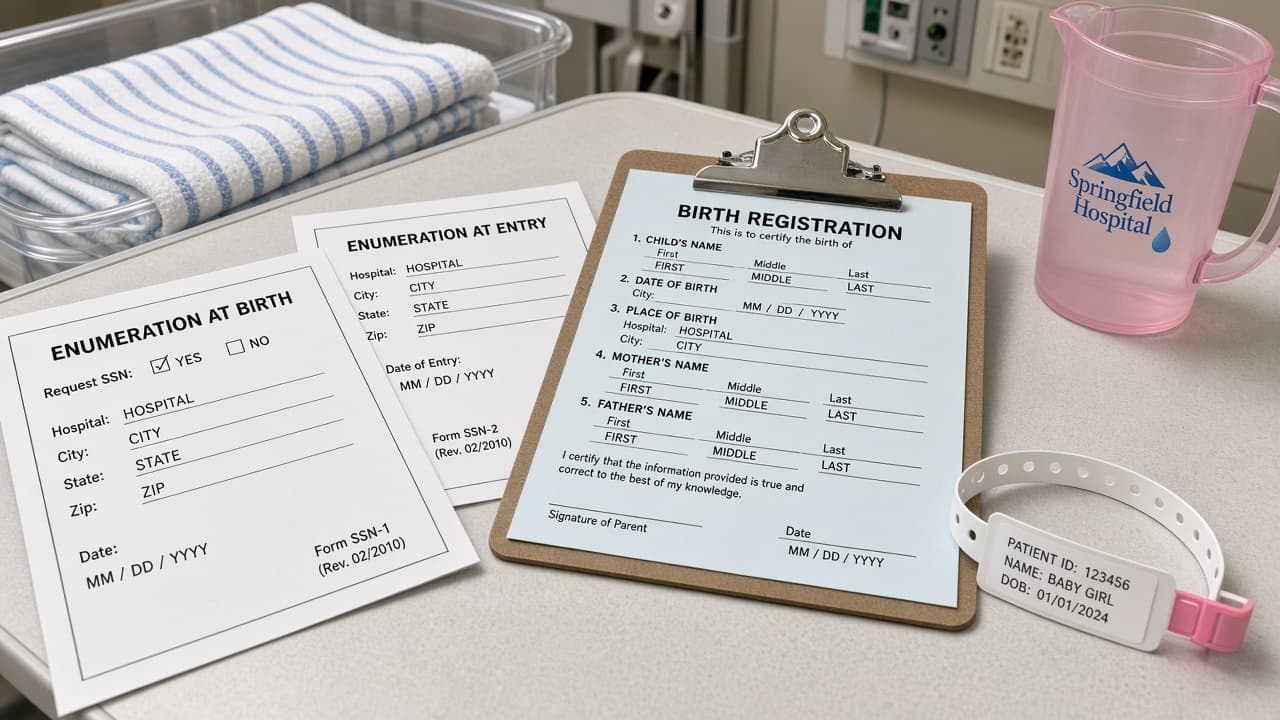
Volume was not evenly spread. In-migration, births, and later Enumeration at Birth put pressure on some allocations far sooner than others. Most U.S. newborns now receive a number because a parent answers yes at the hospital. That channel, and why a hospital or mailing ZIP is not a biography, is in Enumeration at Birth.
Randomization did not invent extra digits. It stopped rationing the remaining stock by state. Unused areas that had sat idle, except the reserved bands, could be assigned anywhere.
Why the old assignment method leaked
The first three digits were never a sure birthplace, even before 2011. Before 1972 they followed the state where the application was filed. From 1972 they followed the mailing ZIP on the original application. Still, the public chart made a geography guess good enough for a parlor trick. If someone knew roughly where an application had been filed and roughly when, the area-and-group space shrank.
The last four digits were treated as almost public. Pay stubs print them. Campus IDs print them. Medical portals print them. Those four digits were the unique part once the first five could be guessed. Randomization closed that gap for numbers assigned on or after 25 June 2011. It did not recall the last four from every form that already stored them.
SSA’s randomization FAQs describe the project as a forward-looking way to protect the integrity of the SSN by establishing a new randomized assignment methodology. Forward-looking is the key phrase. Old cards were left alone. New assignments stopped advertising geography and group order.
We will not reconstruct the first five digits from a filing place and a year. That is the trick randomization retired for new cards, and it is not a service this site will offer for old ones either.
What SSA changed on 25 June 2011
SSA’s randomization page lists three effects. They are administrative facts, not folklore. POMS RM 10201.030, the structure instruction, says the same thing in internal language: it describes what area, group, and serial represented prior to 25 June 2011, and then states that beginning on that date this structure is no longer of any significance. The hyphens and the three-two-four print shape stayed. The assignment story did not.
POMS RM 10201.050 is the assignment instruction. Beginning 25 June 2011, SSA assigns all Social Security Numbers randomly. Before that date, central assignment walked through the area numbers allocated to a state, using the same group number as it moved from the lowest area to the highest. SSA no longer allocates area numbers to specific states.
A new card can therefore start with a prefix that never sat on a classic state row, or with a prefix that once belonged to a state the holder has never seen. Either case is normal after randomization. Neither case is a biography.
What did not change
Randomization was an assignment change, not a reprint. Cards issued before 25 June 2011 were not recalled. People did not get new numbers. Employers did not have to re-collect every W-2 identifier. The nine digits a person already had remained the identifier.
Reserved patterns stayed reserved. SSA’s randomization FAQs say the agency will not assign group 00 or serial 0000, and that those patterns continue to be invalid. POMS RM 10201.035, dated 23 June 2011, the day before the last High Group publication, lists the same impossible shapes: area 000, area 666, the 900 series, group 00, and serial 0000. Areas 900–999 cannot be Social Security Numbers. IRS uses that neighborhood for ITINs and ATINs, but only with published group ranges. A 900-series number without those groups is still not an SSN.
The issuer did not change. SSA still assigns numbers. A format website does not. Applications still go to SSA. A public checker that claims to mint an unused number, or to match a name, is selling a different product than a format check.
Nine digits remained nine digits. SSA did not add a check digit or a tenth character. Longevity came from pooling unused areas, not from lengthening the identifier.
The High Group List freeze
The High Group List was a public employer aid. For each area number it showed the highest group that had been opened as of a publication date. If a claimed number used a group that had not yet been opened in that area, a payroll clerk could treat it as not yet issued. That test only worked while groups opened in a published order.
SSA’s employer High Group page still carries the warning: the June 2011 list is the final publication. Implementation of randomization on 25 June 2011 eliminates the significance of the High Group List and makes it ineffective for validating numbers issued through the new random method. The last file is dated 24 June 2011, the day before the switch.
The randomization FAQs are just as flat. There are no plans to update the High Group List. It is frozen in time. It can only be used to see the area and group numbers SSA issued prior to the randomization date. It cannot see a number assigned in 2012. It cannot see a number assigned yesterday.
A frozen snapshot used as a modern “issued or fake” test produces false rejections. We will not run that test. SSA’s own FAQs tell agencies that official verification systems are much more accurate than the High Group List. Those systems talk to SSA records. This website does not.
Unused areas entered the pool
Once assignment stopped being a state ration, prefixes that had never been handed out could be used. SSA’s randomization page and FAQs both say previously unassigned area numbers were introduced for assignment, excluding 000, 666, and 900–999. A first-three-digit value that is missing from the classic state chart can still be a possible Social Security Number format after 25 June 2011.
That is why older folklore fails. Older tables treated prefixes missing from the published issuance list as impossible, and that list topped out at 772. Current SSA rules allow previously unassigned areas except 000, 666, and 900–999. Area 333 is not an unused leftover: the last geographic chart listed it in Illinois, and the final High Group file shows it had already been issued. The reserved-pattern list, and the myths we refuse, are in Impossible SSN patterns.
Historic program bands on the public chart have a narrower caveat. Unused 700–728 railroad numbers were put in the nationwide pool. New Enumeration at Entry cards are assigned at random, not from 729–733. The historic allocation chart is not reprinted here.
Areas 900–999 still cannot be Social Security Numbers. That band is an IRS neighborhood, not an SSA overflow tank. Randomization did not move ITINs into the SSN pool.
A historic area name is a chart lookup, not a biography
If the first three digits appear on the pre-2011 allocation chart, our checker can name the historic listing. That name is a public-chart match. It is not proof SSA assigned the number. It is not a birth state. It is not a current address.
Even before randomization the area was a filing state or a mailing ZIP, not a sure birthplace. After 25 June 2011 a new assignment can use an area that once sat on a California row for a person who has never lived in California. The print shape still looks like AAA-GG-SSSS. The geography story does not apply to that new card.
Hospital enumeration makes the old birth-state guess sloppier still. The pre-2011 area followed the mailing ZIP on the birth-registration record, usually a parent address. That path is explained in the Enumeration at Birth guide.
We keep the historic label because old records still exist and people still ask what the chart said. We pair it with the 2011 caveat every time. A 2015 card that happens to start with a historically Texan area is not a Texas card.
What a public checker can still say
A public site cannot query SSA’s Numident. POMS RM 10201.035 is explicit: a Numident query is the most reliable means of determining whether SSA assigned a number, and an invalid SSN is one the agency never assigned. We do not have that query. We apply published composition rules.
Those rules still have teeth. Area 000, area 666, areas 900–999, group 00, and serial 0000 remain unused as Social Security Numbers. A number in the 900 series with a published ITIN or ATIN group is an IRS pattern, not a broken SSN. Other 9xx groups can be IRS internal numbers or simply not an SSN. Famous printed samples are samples. Everything else that avoids reserved values is a possible format, not a confirmed assignment.
Possible means the digits follow published rules. It does not mean a person exists. It does not mean a wage report will pass. Employers who need a name-and-number match use SSA’s SSNVS. Work authorization is E-Verify. Those are government systems. This is a browser format check.
What this site will not pretend to do
SSA’s randomization FAQs tell federal and state agencies that official verification systems remain available and are much more accurate than the High Group List. That sentence is the honest split. Randomization retired a public ledger trick. It did not open a public people-search API.
We will not generate unused numbers. We will not guess the first five digits from a filing place and year. We will not treat a frozen High Group snapshot as a fake-or-real oracle. We will not sell a “full report.” Those products fight the reasons SSA randomized assignment.
Use this page to understand why a modern card does not advertise a state, why a missing High Group row is not a verdict, and why a reserved pattern is still reserved. Use the historic allocation chart when you need the old rows. Use SSA when you need to know whether a number was assigned to a particular person.
Frequently Asked Questions
When did SSA start randomizing Social Security Numbers?
25 June 2011. Cards issued before that date were not rewritten. New assignments from that day are randomized.
Why did SSA randomize Social Security Numbers?
SSA’s randomization page gives two reasons: protect the integrity of the SSN, and extend the longevity of the nine-digit number nationwide. State-by-state allocation was exhausting some areas. Public charts made the first five digits easier to reconstruct from where and when an application was filed.
Are SSNs still assigned by state?
No. Randomization removed state allocation of area numbers for new cards. The Area Numbers page is a historic chart only.
Were existing Social Security cards recalled in 2011?
No. Randomization changed how new numbers are assigned. Numbers already issued stayed the same. People did not receive replacement identifiers.
Did randomization change reserved values?
No. Area 000, area 666, areas 900–999, group 00, and serial 0000 stay unused. SSA’s randomization FAQs and POMS RM 10201.035 still list those patterns as invalid.
Can I still use the High Group List?
Only as history of groups issued before 25 June 2011. SSA froze the list. The last publication is dated 24 June 2011. It cannot say whether a randomized-era number has been issued.
Can a public site tell if a post-2011 number was issued?
No. The High Group List is frozen. Only SSA can confirm assignment. A format check can only apply published reservation rules.
Does a historic area match mean the person lived there?
No. Before 1972 the area followed the state where the application was filed. From 1972 it followed the mailing ZIP. Neither was a sure home or birthplace. After 25 June 2011 new assignments are not allocated by state at all.