The written form
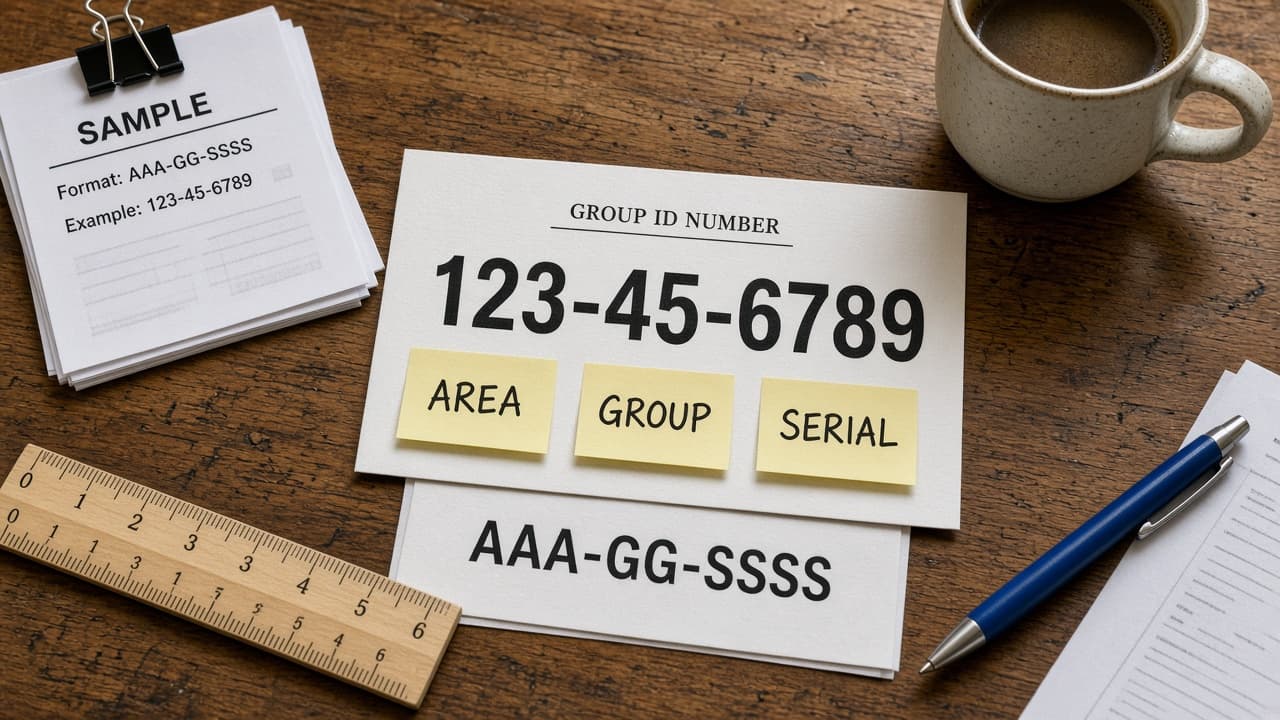
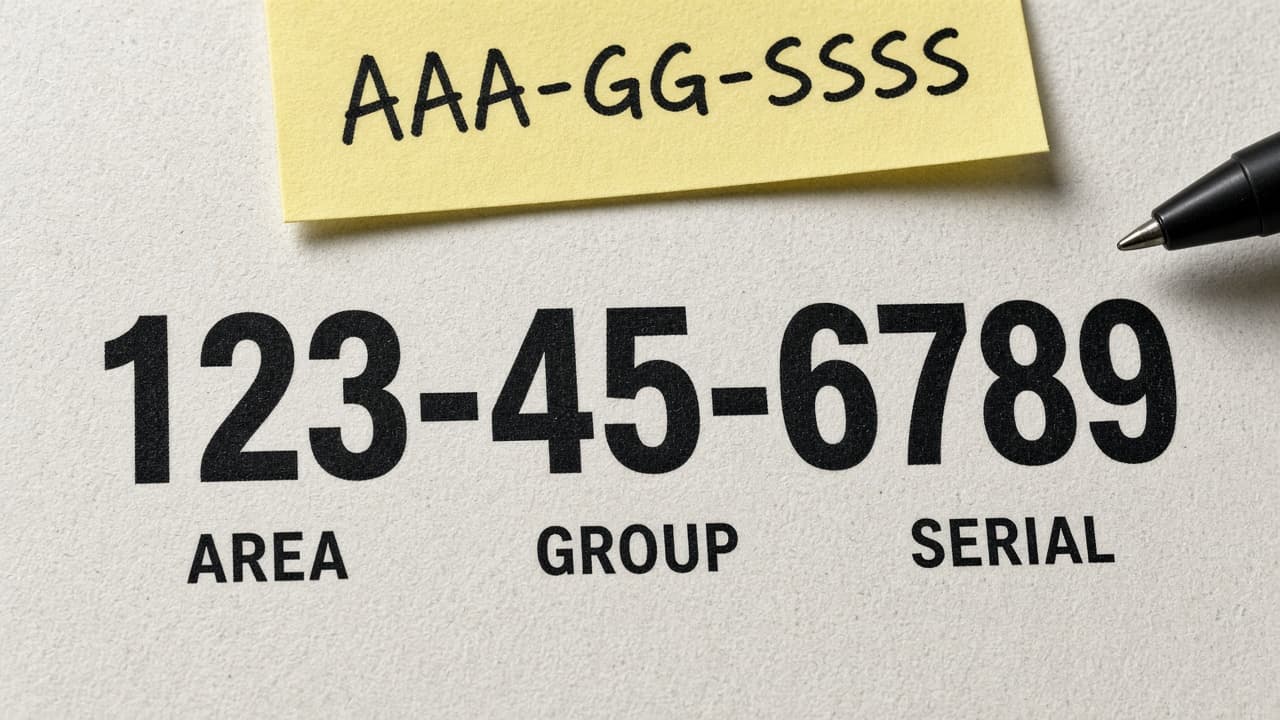
SSA writes every Social Security Number as AAA-GG-SSSS: a three-digit area, a two-digit group, and a four-digit serial. The hyphens are conventional. They are not part of the identifier. A payroll file that stores 123456789 and a card that prints 123-45-6789 are holding the same nine digits.
The labels attached to those blocks are older than randomization. Area, group, and serial were administrative names for how SSA once assigned and filed numbers. After 25 June 2011 the Administration still prints the same shape. New assignments no longer follow the old geographic and group-order rules.
If you only need to see a number split into those three blocks, use SSN Structure. That page is a decoder. This article is the history behind the labels.
Area number: a filing state, then a mailing ZIP
The first three digits were the area number. Until 1972, local offices issued cards from blocks allocated to that office’s state. The prefix marked the state where the application was filed, not a unique office code and not a birthplace. A person could apply away from home, so it was never a promise of later residence.
From 1972, SSA issued cards centrally and chose the area from the ZIP code on the original application. That ZIP was a mailing address. A student, a service member, or a parent applying for a newborn could list an address in another state.
SSA’s history of the numbering scheme is plain on this point. The area was an assignment convenience. It was a way to parcel a nine-digit system across offices and, later, across ZIP bands. It was not a biography field.
How the public area chart was used
SSA published which area numbers were allocated to which states, territories, and possessions. Assignment generally started in the Northeast and moved west. New Hampshire received 001–003, the lowest band. Later western and Sun Belt blocks sit higher on the chart. Extra bands were added when a state’s original allocation ran short.
A match on that chart is a historic band. It does not prove that every number in the band was issued. It does not prove that the cardholder lived in that state. Some prefixes were shared or split (for example 586, or 232 by group), so a prefix can be historically ambiguous even before 2011.
We reproduce the public chart at SSN Area Numbers as history, not as a live assignment map. After 25 June 2011 a modern card can carry an area that the old chart never associated with the applicant’s state.
Program bands that were never a hometown
Some first-three-digit ranges were program allocations, not states. Areas 700–728 were a Railroad Retirement Board series before 1 July 1963. Areas 729–733 were associated with Enumeration at Entry: numbers assigned through immigration processes rather than a state field office. Those bands mark a channel. They do not mark a hometown.
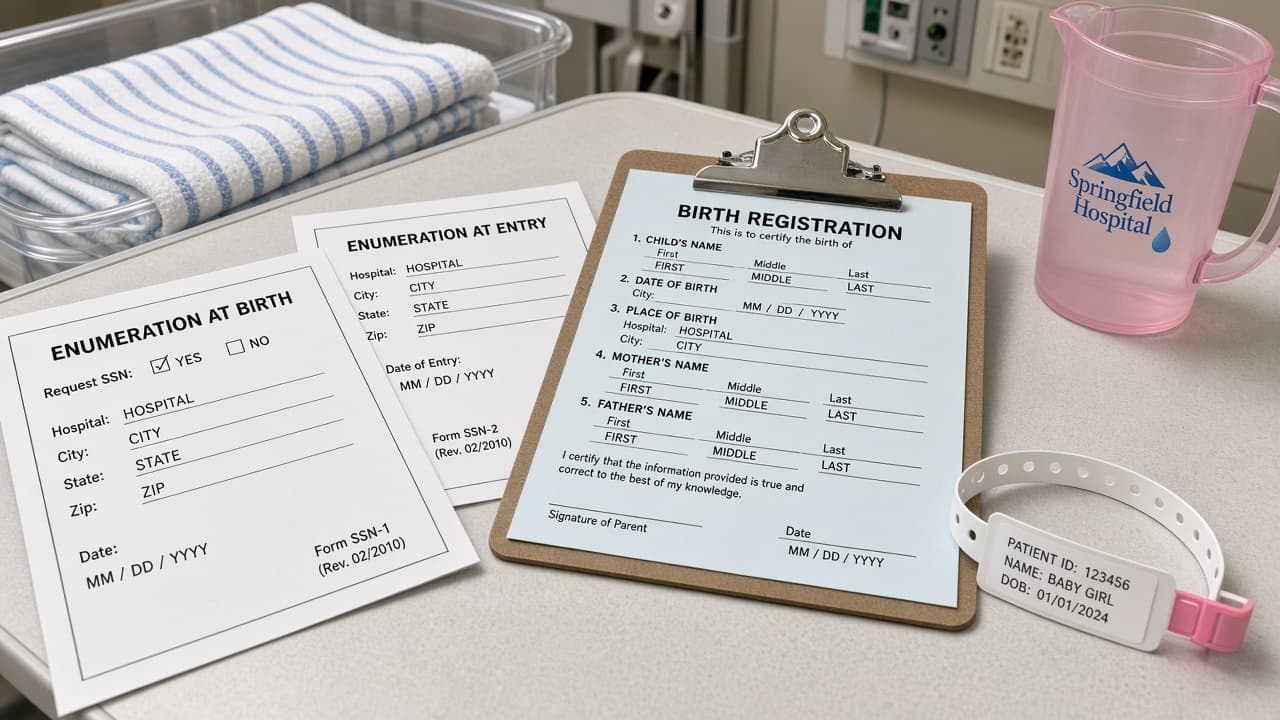
Hospital Enumeration at Birth is another reason “area equals birth state” was always sloppy. The application address is the mailing ZIP on the birth-registration record, usually a parent address, which may not match a later home. That path is explained in Enumeration at Birth.
After randomization, unused 700–728 numbers were put in the nationwide pool. New Enumeration at Entry cards are assigned at random, not from 729–733. A 700-series prefix on a card issued in 2016 is not a railroad record. Treat a special-band hit as a chart note, then stop.
Group number and the odd-then-even ledger
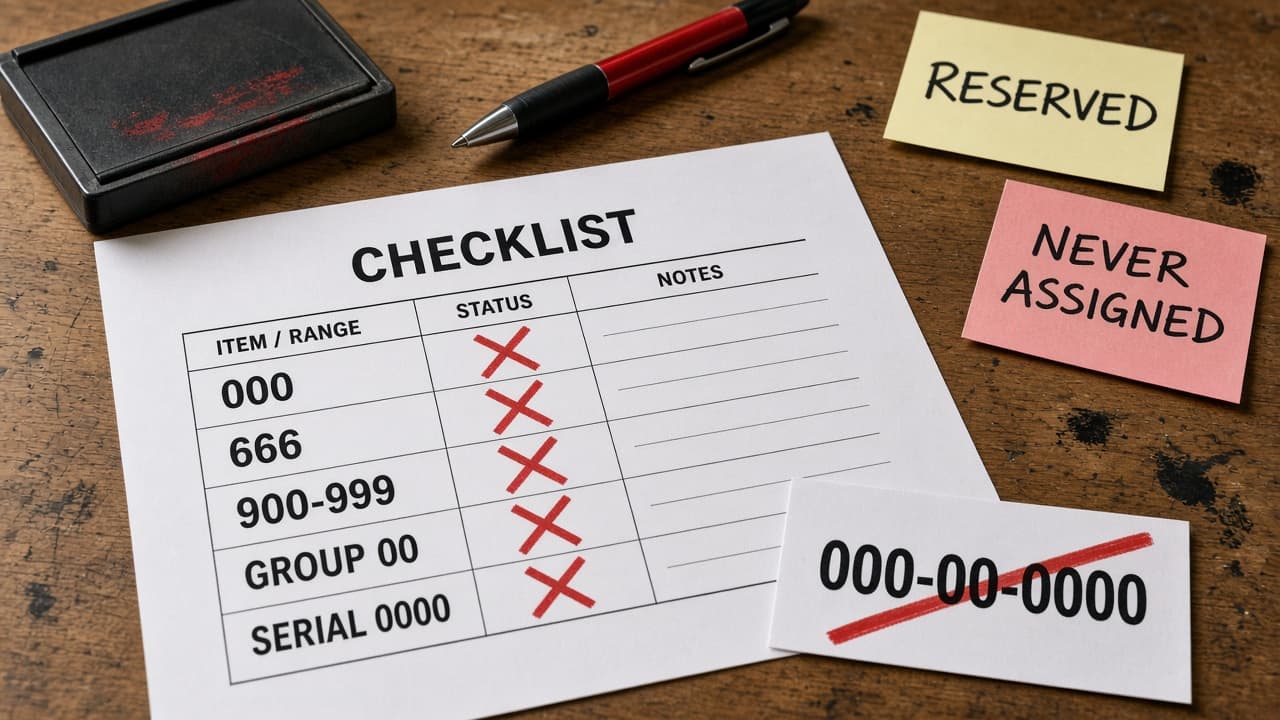
The middle two digits are the group. They run from 01 through 99. Group 00 is not used, and that reservation still holds after randomization.
Groups were not issued in ordinary counting order. SSA’s administrative sequence, recorded in POMS RM 10201.030 and in the public history of the numbering scheme, opened groups in four waves. The order let offices keep ledgers without handing out every number in a straight line.
Two people from the same era can have very different middle digits. The group was never a personal code. It is not a way to recover a birth year, and it is not a sex or citizenship flag. After 25 June 2011 the wave order is teaching only.
Serial number: uniqueness, not a life story
The last four digits are the serial. Inside a group they were issued from 0001 through 9999. Serial 0000 is not used. That reservation is still current.
Serial digits do not encode age, sex, or citizenship. Their only job was uniqueness inside a group. A low serial does not mean an older person. A high serial does not mean a later birth.
After randomization the serial is still four digits on the card. It is still not a date of birth. Combined with a name or a pay stub, those four digits remain sensitive. They are not public property because they sit at the end of the print shape.
The High Group List
For decades SSA published a High Group List: the highest group that had been opened in each area. Employers used it as a coarse screen. If a group had not yet been issued in that area, the number was unlikely to be valid for wage reporting.
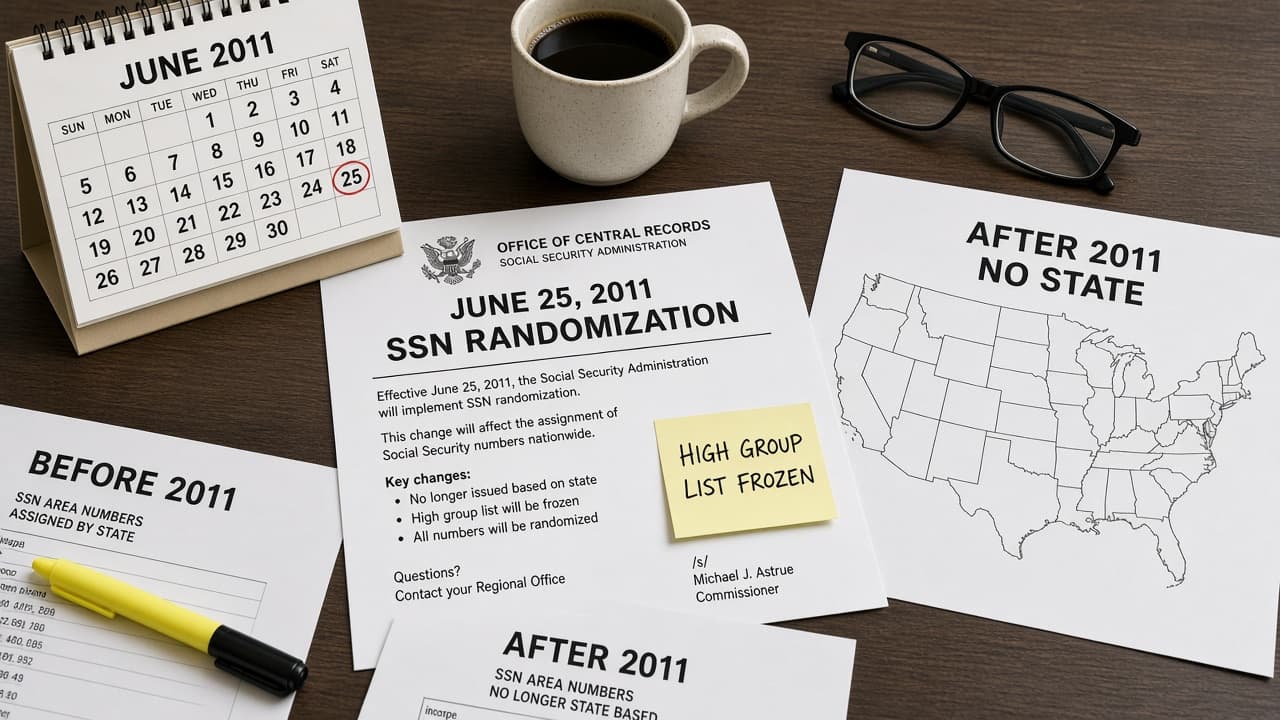
Randomization froze that list. A 2011 snapshot cannot see later assignments. It cannot say whether a modern number has been issued, and it cannot call a randomized-era card fake. This site will not pretend otherwise.
POMS RM 10201.035 still lists patterns SSA never assigns. Those reservation rules are a different product from a High Group check. Reserved values remain reserved. Frozen high-group rows do not.
What 25 June 2011 changed
On 25 June 2011 SSA changed how it assigns new numbers. The Administration calls the change randomization. Numbers already issued were not recalled or rewritten. A card from 2004 still carries the area, group, and serial it was given.
From that day, new area numbers are not handed out by state. Previously unused area numbers, except 000, 666, and 900–999, could enter the nationwide pool. The old group-order story stopped describing new cards. Older issuance tables treated prefixes missing from the published list as impossible, and that list topped out at 772. Area 333 is not that kind of leftover: the last geographic chart listed it in Illinois, and the final High Group file shows it had already been issued.
The print shape stayed AAA-GG-SSSS. The geography and ledger-order story did not. Why SSA made the change, and what it did to every public checker, is in Why SSA randomized SSNs in 2011.
What the nine digits never encoded
Even before randomization, a clean split into area, group, and serial was not a biography. The area followed the state of filing or a mailing ZIP. The group followed a ledger. The serial followed a counter. None of those jobs required a date of birth, a sex, or a citizenship status, and SSA did not hide those facts in the digits.
A format result can apply published reservation rules. Issuance is a Numident question. Only SSA can say whether a particular nine-digit string was assigned to a particular person. We do not reconstruct the first five digits from a filing place and a year, and we do not mint unused numbers. Those are the tricks randomization was designed to stop.
Where SSA wrote the old rules
The composition of the number is in SSA POMS RM 10201.030, Structure of the SSN: three digits, two digits, and four digits, with the historic area, group, and serial names. Invalid patterns are in SSA POMS RM 10201.035, which is why area 000, area 666, the 900 series, group 00, and serial 0000 stay closed.
The older geographic story lives on SSA’s history of the numbering scheme, the public account of how area numbers were allocated and how groups were opened. Randomization itself is documented on SSA’s 25 June 2011 randomization pages, including the decision to stop treating unused areas as state property.
Those publications are why this site treats a historic area name as a chart lookup, not a home address. We apply the published reservation rules in the browser. We do not query SSA records, match a name, or generate unused numbers.
How to read a number on this site
The print shape and the history are easy to mix up because the card still looks the same. Use the splitter when you want the three blocks labeled. Use the historic chart when you want a pre-2011 allocation band. Use this article when you want the administrative story those labels used to tell.
This site is a format check. Possible means the digits follow published rules. It does not mean the number belongs to someone, and it does not mean SSA assigned it. If you need a name-and-number match, that work belongs to official SSA channels, not to a browser decoder.
- SSN Structuresplit AAA-GG-SSSS and see reservation notes on the blocks
- SSN Area Numbershistoric state, territory, or program band for the first three digits, pre-25 June 2011 only
- 2011 randomizationwhat changed for new assignments, and what did not
- Enumeration at Birthhospital and immigration paths that skip a field-office visit
Frequently Asked Questions
What is AAA-GG-SSSS?
Nine digits: a three-digit area, a two-digit group, and a four-digit serial. Hyphens are conventional. 123456789 and 123-45-6789 are the same number.
Do the first three digits show where I was born?
No. Before 25 June 2011 they reflected the state where the application was filed or, after 1972, the mailing ZIP on the original application, not a sure birthplace or current home. After that date new numbers are randomized.
What do the numbers in an SSN mean today?
For cards assigned on or after 25 June 2011, SSA says the old area-group-serial meaning is no longer significant. New numbers are assigned randomly. The print shape stayed AAA-GG-SSSS.
Why were group numbers issued out of order?
SSA opened groups in waves: odd 01–09, even 10–98, even 02–08, then odd 11–99. The order was a ledger method, recorded in POMS RM 10201.030. It was never a personal code and is not a birth-year cipher.
Can I still use the High Group List?
Only as history of groups issued before 25 June 2011. SSA froze the list. It cannot say whether a randomized-era number has been issued.
Did randomization change how cards are printed?
No. New cards still show AAA-GG-SSSS. What changed is assignment: new area numbers are not handed out by state, and the old group-order story does not apply.
If a number matches a historic state, was it issued there?
A chart match is only a public allocation band for numbers assigned before 25 June 2011. It does not prove issuance, residence, or birthplace. After that date the chart does not describe new cards.
Why would a pre-2011 number not match the birth state?
Until 1972 the area followed the state where the application was filed. From 1972 it followed the mailing ZIP. Hospital Enumeration at Birth used the mailing address on the birth-registration record, usually a parent address. Applicants could apply away from home.